Search The Tattler

Showing posts with label Affordable Housing. Show all posts

Monday, January 11, 2021

"Hyper-Local" Emeryville Blogger Rob Arias Purchased Home in Pleasant Hill in 2019, May Be Forced to Sell His Home Here

 Emeryville Booster/Blog Editor Reportedly Moved Out of Town in 2019

Possible Violations Against City's Affordable Housing Program

Editor Rob Arias Tells His Readers He Still Lives in Emeryville


The self styled 'voice of the community' hasn't
been seen in the community for quite some time.

Emeryville blogger, local booster and political pundit Robert Arias, apparently moved to Pleasant Hill nearly two years ago.  A move would tend to undermine Mr Arias' public positioning as the voice of the Emeryville community, if he's sleeping each night in another county.  The move would also have real consequences.  Mr Arias may have violated stipulations in an Emeryville affordable housing program by apparently retaining possession of one of City Hall's few subsidized units, if the Park Avenue unit in question is no longer his primary residence.

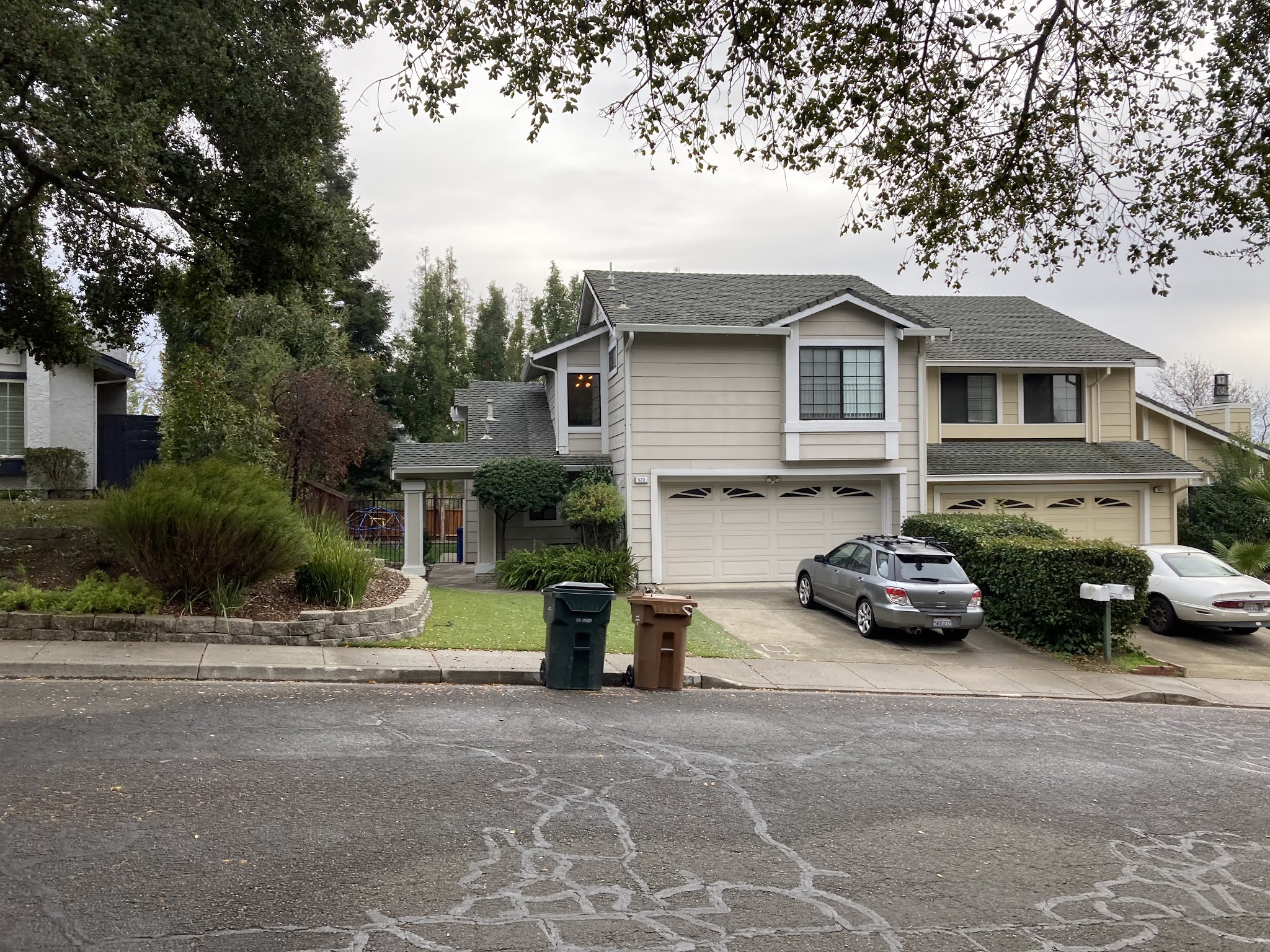
The Tattler learned Mr Arias apparently jumped ship in 2019, closing escrow on an 1,163 square foot, two story home with two bedrooms and two baths, in May, according to public records, in the Contra Costa County community.  At the same time, he has apparently retained his Emeryville unit, purchased (in 2003) through the City's Below-Market-Rate affordable housing program, rather than selling it to a qualifying buyer or obtaining a waiver as the housing program requires. 

Having built a fairly successful, heavily monetized web presence in Emeryville, offering generally positive coverage- the digital equivalent of an old time small town newspaper’s proud, if boosterish coverage, Mr Arias hasn't volunteered anything publicly on his E'Ville Eye about any move 30 miles to the east.


The E'Ville Eye editor purchased this
Pleasant Hill home in May 2019.  
According to Emeryville’s low income housing assistance regulations, BMR owners must live in their units as a ‘primary residence’ for at least 10 months per year.  Living elsewhere represents a breach of contract.  Renting out a BMR unit is also a violation, though it is unclear that this has occurred. The program requires the sale of units to applicants meeting the city's income guidelines, (just as Mr Arias had in 2003) after the owner relocates.  The goal being having a supply, albeit a small one, of affordable housing for purchase in Emeryville. 

BMR unit owners, even though they receive assistance in the initial purchase, are allowed to realize property value gains over the tenure of their occupancy.  By law, Mr Arias would be allowed to keep 20% of the sale price above his initial investment.  Being across the street from the long-planned ten-acre, 500-unit, Sherwin-Williams development and new public park now under construction, Mr Arias’ unit has likely increased in value in recent months, a windfall he will be able to realize the longer he holds the unit.

This story will continue to evolve as new facts are revealed and we will report as our investigation continues.

Mr Arias declined to comment for this story.  

Rob continues to tell his readers he lives in Emeryville.  If the City's housing assistance director finds he has defrauded City Hall's BMR program, Mr Arias will be forced to sell his unit.  Bio pulled from his E'Ville Eye this week.


Sunday, April 12, 2020

COVID-19 Forces 'Maz' Developer to Negotiate With City For Affordable Housing

Finally: Something Good Comes From the 
Caronavirus Epidemic

Virus Increases Emeryville Housing Affordability

The developer of the ‘Maz’ project, a large apartment building being constructed at 3800 San Pablo Avenue, renegotiated his agreement with the City of Emeryville last week, volunteering to add 10 units of affordable housing as a result of the Alameda County COVID-19 Shelter at Home Order.  The County order includes a prohibition on construction projects during the corona virus pandemic and would have forced Holiday Development to stop all work on the 101 unit housing project because Maz was approved without any affordable units.  Rick Holiday, CEO of Holiday Development, approached City Hall Thursday offering to renegotiate his project to add a permanent deed restriction for 10 affordable units to thwart the County’s stop work order for all housing construction projects with less than 10% affordability, coming in just under the wire (actually 9.99%, 10 out of 101).

Mr Holiday has had a very difficult time completing the Maz project, formerly called ‘The Intersection’ after getting City Hall approval for it back in 2013.  The 1.1 acre project, located at San Pablo Avenue and Adeline Street has been set back two times before after an arsonist twice burned down the nearly finished five story building.  After the second fire, the developer optioned to change to modular offsite prefabricated construction.  During the interim period, Holiday also contracted with the University of California to make the building exclusively for the housing use of Berkeley students, a change that incidentally wasn’t cleared with the City of Emeryville.
Maz developer Rick Holiday

In response to citizen calls received by the Emeryville Police Department last week referencing the County work stoppage order and police visits to the site enforcing the order, Mr Holiday at first claimed that since the project is now for student use, that could be defined as low income housing. The argument was presented that with the students (at 100%), the Maz project qualifies for the County’s 10% minimum affordability mandate but was rebuffed by the City Manager Christine Daniel, according to City Hall sources.  Following that rejection and facing a County work stoppage of unknown duration, Holliday agreed to guarantee 10 units of affordable housing with an irrevocable deed restriction.
Emeryville's new housing regulations, enacted after the approval of Maz, require a minimum of 17% affordability for all projects over 10 units.

The Maz project, likely to be renamed, has been controversial from the start.  Approved in 2013 in a 3-2 City Council split vote (Kurt Brinkman, Nora Davis and Ruth Atkin voted YES and Jennifer West and Jac Asher voted NO), Maz turned away from the attempts to make Emeryville housing more family friendly and affordable being promulgated by the then progressive Council minority.   With its zero affordability all market rate housing, Maz also is not family friendly, coming in with almost no three bedroom or even two bedroom units.  Studio apartments make up fully 60% of the unit mix at the anachronistic housing project.  At the time of approval, Mr Holliday told the Emeryville Planning Commission that he saw Maz as a building filled with dynamic young [affluent] people, “Younger people seeking an interesting place to live”,  a prospect the Commission called “exciting” as they passed it over to the City Council for approval.
When it's finally finished, almost ten years after approval, the Maz apartment building will push Emeryville's housing affordability percentage down, despite last week's renegotiation and will drive down the City's already low ratio of resident families to non-families.

The Tattler criticized the project after it was approved in 2013, likening it to a “men’s dorm” owing to the predominance of tech workers drawn to such market rate housing with so many dorm-like studio units.  The ‘men’s dorm’ charge rankled conservative Emeryville business advocate and Tattler hater Rob Arias, to such an extent, he publicly accused Brian Donahue, the editor of the Tattler of being the Emeryville arsonist at a police press conference in 2017 after the second Maz blaze.
The fact that the Maz project will now be for the exclusive use of UC Berkeley students and is therefore actually a dormitory, is merely a coincidence and the Tattler makes no claim of extraordinary prescience when we called it a dorm in 2013.

Sunday, October 25, 2015

City Council Moves to Increase Housing Affordability to 12%

Council Makes Bid For Greater Affordability for Renters

Residential Developers to Face 
New 'Bonus Point' Program

But Will It Work?

News Analysis
Last Tuesday, the City Council finally took up the problem of a flawed and overly lenient set of planning and zoning regulations that have heretofore allowed and even encouraged a plethora of overpriced for rent studio and one bedroom apartments to be built in Emeryville over the last several years.  It's been a problem the residents and even the developers themselves have been in agreement about: rents keep skyrocketing and something needs to be done about it.  Tuesday, the Council finally did something about it.  They have imposed a set of incentives to encourage developers to built new residential development with 12% affordable units included in the mix.  But with an opt-out the Council provided allowing developers to simply write a check to the City instead of building affordable units in a project, will Emeryville actually achieve greater affordability moving forward?
The numbers as they say, don't 'pencil out' for a good outcome for affordability.

The Background
Emeryville has been on a major housing spree over the last 20+ years, filling our town with luxury apartment blocks, doubling our population.  Before last November's election when there was a pro-developer Council majority at the helm, developers were given a green light to do whatever they wanted regarding building housing.  Now however they're facing a more circumspect City Council majority.  Developers are insisting we keep up the building boom, citing the economic law of supply and demand, insisting rental rates will finally go down if the Council will only let them build out the last few parcels of land left in Emeryville with market rate housing.  So their solution to the problem of overpriced rentals is to build more of them.  But Emeryville has already built more than its share of market rate housing, especially rental housing.  In fact, we have more than doubled what the Association of Bay Area Governments (ABAG) recommended for our town as documented in their Regional Housing Needs Assessment (RHNA).
Ironically, before the decades long building spree, affordability wasn't on the mind of anyone in Emeryville.  The doubling of our housing stock has only served to decrease affordability, despite the contrary proclamations of economic laws from profit seeking developers.
Seeking to disrupt the spiral of unaffordability, the City Council majority last February moved to impose a temporary moratorium on large new residential projects for the last parcels of fallow land left but they were rebuffed by the old guard of the Council in a 3-2 vote requiring a super majority 4-1 vote.  The failure of the moratorium is what is driving this Council majority's new policy proscription.

The Solution
Emeryville isn't completely without affordable units.  The Planning Department at City Hall puts the number at 11.17% city-wide as of now.  The new Bonus Point system proposal seeks to increase that number to 12%, still low by Bay Area standards but an improvement over the current condition.
The developers can still build 'by right' whatever they want regarding including affordable units.  A 'by right' project bumps up against our zoning and planning regulations as spelled out by our General Plan, the document Emeryville residents crafted to make the town they want to live in.  However developers, always seeking ways to maximize their profits, routinely request permission to build bigger projects than the General Plan normally allows, bigger than what they can build by right.  The permission is granted in the form of 'bonus points'.  This is essentially a baked in set of negotiating parameters between the developers and City Hall.  If a developer wants say a taller building, he must provide something to temper the project, like traffic amelioration.  To be included in the new list of bonus points is the 12% affordability plan. Developers will get the points they want to increase their project's density if they build in at least 12% affordable units as prescribed by City Hall.  
'Affordability will move 
from 11.17% up to 12% 
if everything works 
according to plan'

However, the Council is proposing developers can still get their bonus points without building the affordable units on-site by cutting an in lieu check to City Hall who will later build the required number of affordable units off-site in Emeryville.  The idea of off-site affordable units it should be noted, tends to turn its head away from contemporary ideas about mixed income residences peppered throughout the city and embraces the old Robert Moses model of geographically cordoning off housing projects for poor people.

Council Second Guesses Its Own Study
Much of the talk at the Council chambers Tuesday centered around the in lieu off-site idea.  The question before the Council was the amount of money the developers should pay in lieu of building the required affordable rental units on-site.  Implicit in that argument is the idea that the money paid should equal what it would take to build the required off-site units.  An Emeryville funded nexus study on this (the Keyser Marston Study) that showed the market in our region will bear some $35,000 in lieu fee per required affordable unit but the City Council regardless settled on a $28,000 per unit fee, the same as what the City of Berkeley currently charges.  However the City of Berkeley conducted a nexus study of their own recently and strangely, that study showed an $85,000 market rate for replacement off-site affordable housing.  Presumably the newly revealed higher replacement costs revealed by the new study will drive Berkeley to increase their developer fees accordingly.

All of this drives the question of what does it really cost to build affordable housing?  Is the City Council hamstringing us by not charging developers what it actually costs to build off-site?  Will taxpayers be left holding the bag?  Or will we simply fall behind and drive down our affordability?  For years Emeryville built affordable housing using the Redevelopment Agency.  Presumably, the cost per unit the Redevelopment Agency paid is known.  These are the numbers the City Council should be guided by.  Barring that, Emeryville's affordability will go up or down over time, showing everyone if this Council's stated desire to increase affordability for our town is genuine.  The actual numbers will reveal all.

The City Council will engage in a second and final reading of the ordinance containing the new bonus point system at the November 3rd Council meeting.

Saturday, September 26, 2015

Emeryville Can Demand More From Developers Than Neighbors Cities Can

Position of Power:
Emeryville Can Say 'NO' to Developers and the Developers Know It

After a generation of taking anything and everything from every developer who wished to make a buck off our town, Emeryville is finally in an inarguable position now to demand better development.  And we can easily get it.

Opinion / News Analysis
Abstract:
  • Emeryville doesn't need any more market rate housing.
  • Emeryville doesn't get any positive revenue from housing.

Got that?  These two points aren't a matter of someone's opinion even though that word precedes them in this story.  These two points are factual and they assertively inform us through hyperbolic debate frames rising up from interested parties of the ideological sort as well as those who would materially benefit.  Once people realize the prophetic exigency of these two points, how we finish the job of developing our town becomes a lot clearer.

Emeryville is in an enviable position with regards to development. Due to forces in our control and those out of our control, we're at a powerful place where we can call the shots; we can rationally say NO to flawed development, starting now.  The last City Council election with its progressive sweep and the rise of a newly enlightened electorate has something to do with this fortunate position we find ourselves in, of course, but in addition it has to do with the extremely limited supply of large scale development properties left in our town and the incredibly valuable geographic location of Emeryville that only gets more valuable over time.   But more pressing than those extant and compelling realities, our new power position has to do with our over the top, nay epic RHNA numbers.

Emeryville's RHNA Numbers
Twice as big as we need.
RHNA or Regional Housing Needs Assessment (pronounced reena) is a housing data compilation of the whole Bay Area produced by a consortium of local governments meant to mete out each municipality's work load share of the goal of providing a jobs/housing parity.  The state mandated idea is each city should carry its weight as far as providing enough housing for the entire region.  Emeryville was given a specific housing goal by this consortium (known as Association of Bay Area Governments ABAG).  Due to Emeryville's huge housing boom over the last 20 years, we not only met our ABAG goal, we smashed the goal.  We actually doubled the market rate housing goal, Emeryville's built market rate housing right now is more than 200% of what RHNA suggests.  At this point, nobody can claim with a straight face Emeryville needs to build more market rate housing, that we're somehow derelict in our duty.
If we do approve more housing projects moving forward, it can and should be only those that improve the livability of our town.  We've already more than done our regional market rate housing duty.

Emeryville's 'double RHNA' numbers have the effect of punching a huge hole in the 'supply and demand' argument that's always proffered by developers.  They use that argument to shame municipalities into approving housing projects they want to build.  Some places, they would have a point.  Not here.
Everybody knows the argument; if we increase the housing supply, the housing demand goes down and so do the prices.  Except here in Emeryville we've doubled RHNA and the housing prices still keep going up, especially rentals.  That's because all the developers are really interested in is maximizing their profits and thus, all they're interested in building (and all we've been getting) are $2500 per month one bedroom luxury apartments. As shocking as it is, this shouldn't come as a shock.  The idea that a developer (or indeed any business owner) might lie to protect his profits should be seen as a given...especially since there's no down side to lying, no penalty.  And so that's what we get from them generally.

With the supply and demand canard off the table, there's really no cogent reason developers can offer as to why we should accept a flawed housing project.  Some apologists will fatuously claim housing development adds to the City's tax base, but that's a lie too; Emeryville actually loses money (a little) off residential projects.  Residents use more in services than they pay in.  City Hall gets its revenue from businesses, not residents.

With nothing to gain and much to lose, at this point with these RHNA numbers, developers better offer something overwhelmingly good in trade for approving a project that will increase traffic, noise, pollution and crowding.  That's the point of the Tattler story of July 23rd.  We posit there are four chief areas where Emeryville needs improvement:

  1. Affordable Housing
  2. Family Friendly Housing
  3. Parks / Open Space
  4. Locally Serving 'Non-Formula' Retail
These points are measurable.  We say every developer's project proposal must demonstrably improve (or least not make worse), the existing ratios we have in these four categories.  These should be the starting point for any residential project.  Otherwise, the default position should be no development at all.  Right now, we have an intensively developed town with a lot of density and a lot of commercial revenue shared by our existing population.  If we stay as we are, we're fine.  Unlike our neighbors who haven't met their RHNA goals, we don't need to take on more market rate residential development.
The residential developers may be salivating at our remaining three or four fallow patches of land with their boatloads of potential profit but we could retain the status quo; keep a couple of patches of our town fallow for future consideration (a future park perhaps?), and we'll be OK.
Or we could allow more development...a new kind of development we haven't demanded or gotten up until now; development that demonstrably improves our town.

Emeryville has always had naysayers in our midsts.  There's always been those who loudly claim we're no good, terrible really and we must let the developers have what they want because we don't rate anything better.  Indeed, before last November, the City Council majority itself said as much ad infinitum over the years.  There are plenty of regular residents still saying it now.  Somehow, these Chicken Littles see these last pieces of fallow land left as an emergency; a gap that must be filled with whatever the developers want.   No time to waste they're saying, we must defer to the developers now.
Or maybe they'll bide their time: we expect the naysayers to try to retake the City Council majority next year with lots of hidden campaign donations from developers.
But in the meanwhile, next time you hear the old 'supply and demand' con, remember our epic RHNA numbers.  Next time you hear them try to frame the debate in terms of development being a given, remember we don't increase our revenue from residential projects.

To reiterate:
  • Emeryville doesn't need any more market rate housing.
  • Emeryville doesn't get any positive revenue from housing.

Monday, June 15, 2015

Consequential to Emeryville: Court Finds Developers On the Hook for Affordable Housing

From the Los Angeles Times:


Developers can be required to include affordable housing, California high court rules

By MAURA DOLAN  June 15th, 2015

The California Supreme Court decided unanimously Monday that cities and counties may require developers to provide below-market-rate housing as a condition of a building permit.

The decision is expected to make it easier for Los Angeles and other cities with housing shortages to force developers to build or pay for affordable housing.

“There is no reason why a municipality may not ... [require] new developments to set aside a percentage of its proposed units for sale at a price that is affordable to moderate or low income households,” Chief Justice Tani Cantil-Sakauye wrote for the court.

California has a housing shortage, with demand exceeding supply. To ensure cities and counties remain affordable, scores of local governments have passed ordinances requiring developers to provide below-market-rate residences.

Monday's decision stemmed from a constitutional challenge of an affordable housing ordinance passed in San Jose five years ago.

The state building industry, backed by real estate groups, sued and blocked the city from enforcing the law. Developers contended it was unconstitutional “taking” of private property.

The law requires developers building 20 or more housing units to offer  15% at below-market rates or pay into a city fund.

Nearly 200 cities and counties have passed some version of the law.

In a concurring opinion, Justice Ming W. Chin observed that the San Jose ordinance permitted developers to build the affordable units more cheaply than the market-rate housing. An ordinance that required developers to offer housing at below-cost rates might fare differently, Chin wrote.

“Providing affordable housing is a strong, perhaps even compelling, governmental interest. But it is an interest of the government,” Chin wrote. “The community as a whole should bear the burden of furthering this interest, not merely some segment of the community.”

Andrew L. Faber, who represented San Jose before the court, said the ruling would encourage more cities and counties to require developers to build affordable housing.

He said the California Building Industry Assn. has been aggressively challenging such ordinances,  and “this decision is quite a rebuff to their arguments.”

“It is very important because no one disputes that there is a huge affordable housing crisis in California,” Faber said. “Housing prices have gone up, and incomes haven’t risen to meet them.”

Thomas B. Brown, who represented California’s cities and counties, called the ruling “a ringing recognition” that local governments have the right to pass such laws.

The decision “recognizes that these kinds of laws are really land use laws,” Brown said.

But Tony Francois, who represented the building industry in the case,  called the decision “very disappointing.”

“The ruling allows government to impose financial penalties on providers of new housing – a penalty that can only deter efforts to ease the state’s housing shortage, and make it even harder and costlier for average families to afford a home in California,” said Francois, a senior staff attorney with the Pacific Legal Foundation, a conservative, property-rights group that represented the industry free of charge.

“Even more broadly,” he added, “ the decision exposes every homeowner and property owner in California to limitless potential fees and other property demands any time they ask for a permit of any kind, because the local government is allowed to use the permit process to raise money for any purpose whatsoever, whether it relates to the property owner or not.”

He said the building industry was considering its options, which could include an appeal to the U.S. Supreme Court.